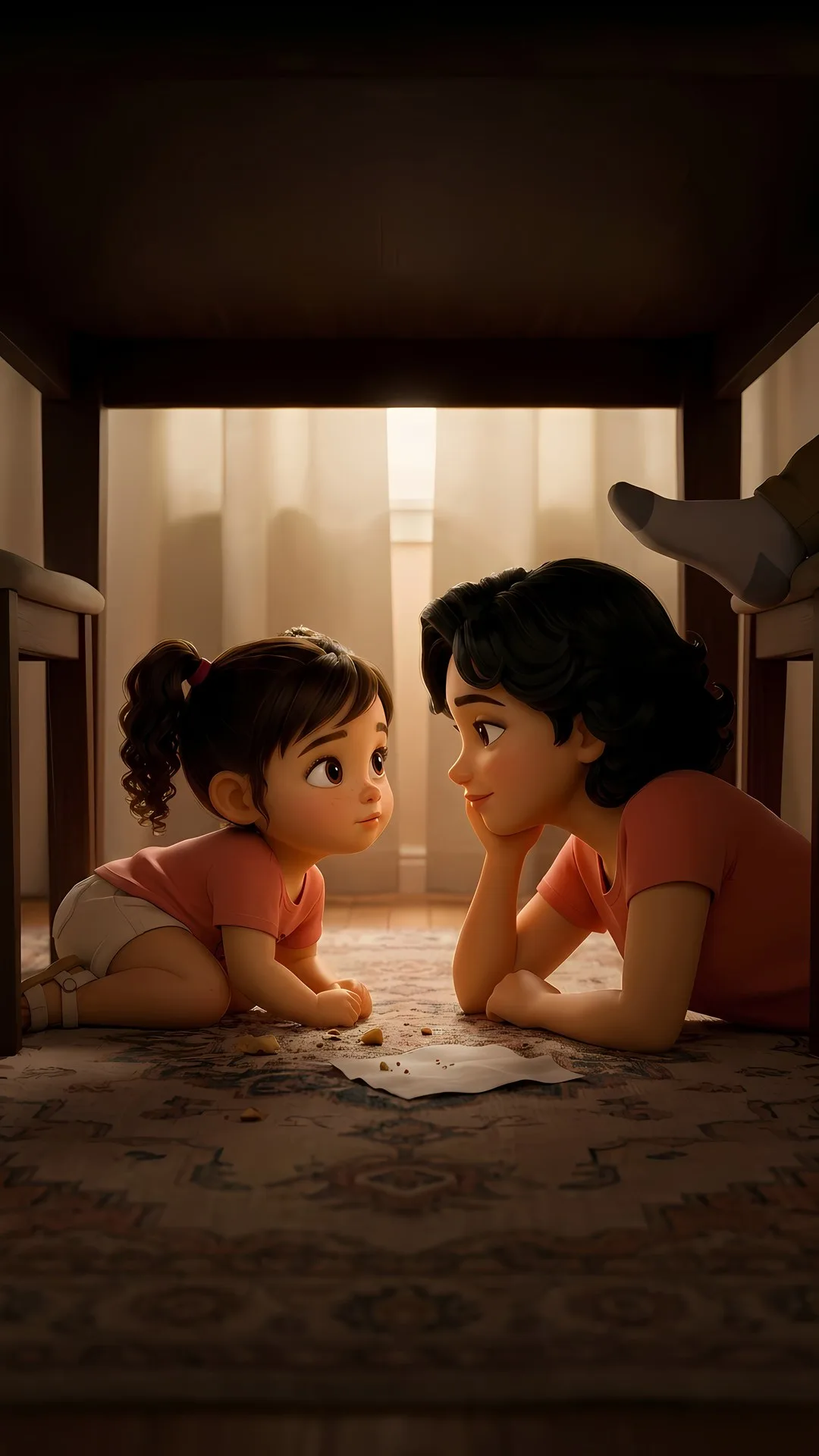
a true story about big feelings
She Froze. I Grabbed the Wrong Fix.
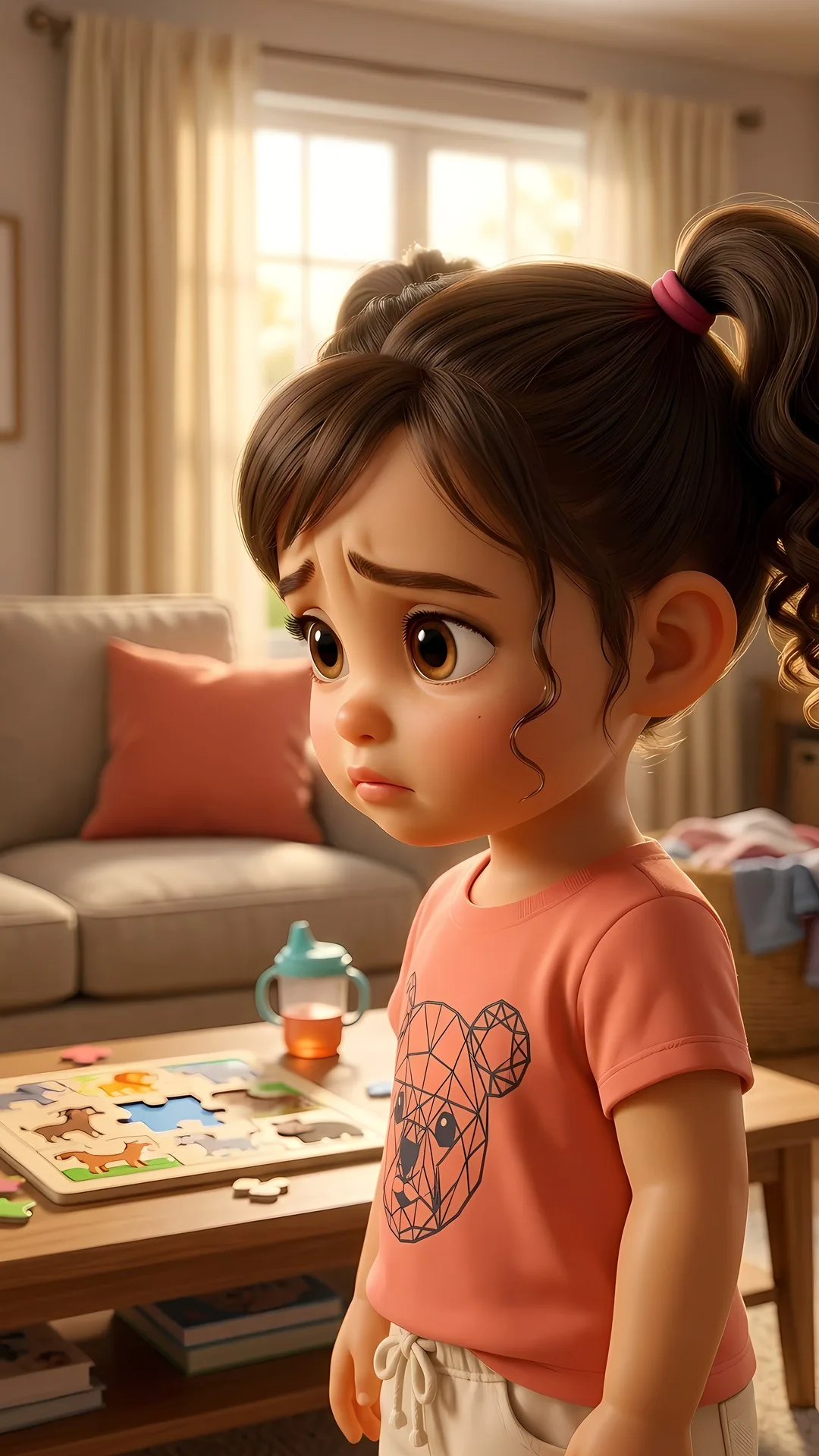
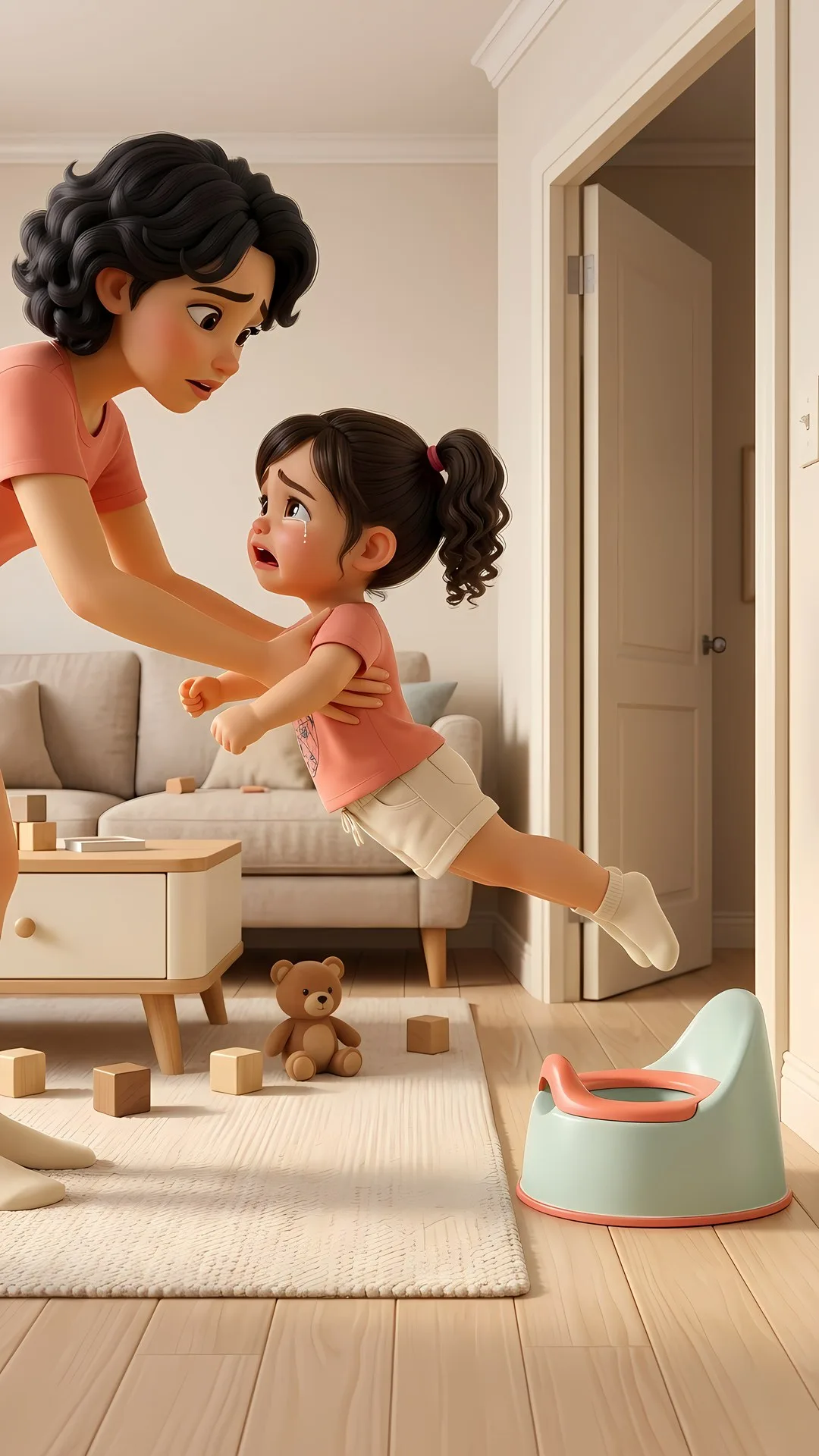
She didn't cry. She just froze. One puddle, one giggle, and the whole playground looking. Every part of me wanted it gone. So I rushed in, wiping fast. Nobody saw. Get up.
the realization
When your child freezes in public, slow your own body down first, then stand close and name the feeling in plain words. Your calm is what brings her back, not a quick fix.
Your kid has a moment in front of everyone. A spill, an accident, a giggle from another child, and she goes completely still. You want to fix it fast and disappear. But the rushing seems to make her shrink even more. If you've stood there not knowing what to do, you're not the only one, and there's a calmer way through it that's backed by how little kids actually handle big feelings.
have you ever felt this way too?
Freezing is a real response, not stubbornness or her being dramatic. When a young child feels exposed and overwhelmed, the thinking part of her brain basically goes offline and her body just stops. She isn't choosing to stand there. She literally can't move yet. Siegel and Bryson call this the moment the emotional brain takes over while the logical brain is still being built. So the freeze is information. It's telling you she's flooded and needs help coming back to herself, not a push to hurry up.
Here's the part most of us get wrong, me included. Our instinct is to make it gone. Wipe fast, cover it, get up, nobody saw. But to her, all that speed says this is an emergency, this is bad, we have to hide it. The faster you move, the bigger the problem feels to her, and the smaller she gets. Your panic becomes her panic. It's not that you're doing it out of meanness. You just want her pain over with. The trouble is she reads your body before she hears your words.
A little kid borrows your steadiness when she's lost her own. So before anything else, take one slow breath and soften your own body. Drop your shoulders. Slow down. This isn't a nice-to-have. It's the actual tool. A grown-up who's calm and unhurried tells her, without a single word, that this is survivable and she's not alone in it. You can't rush a child into calm. You can only lend her yours.
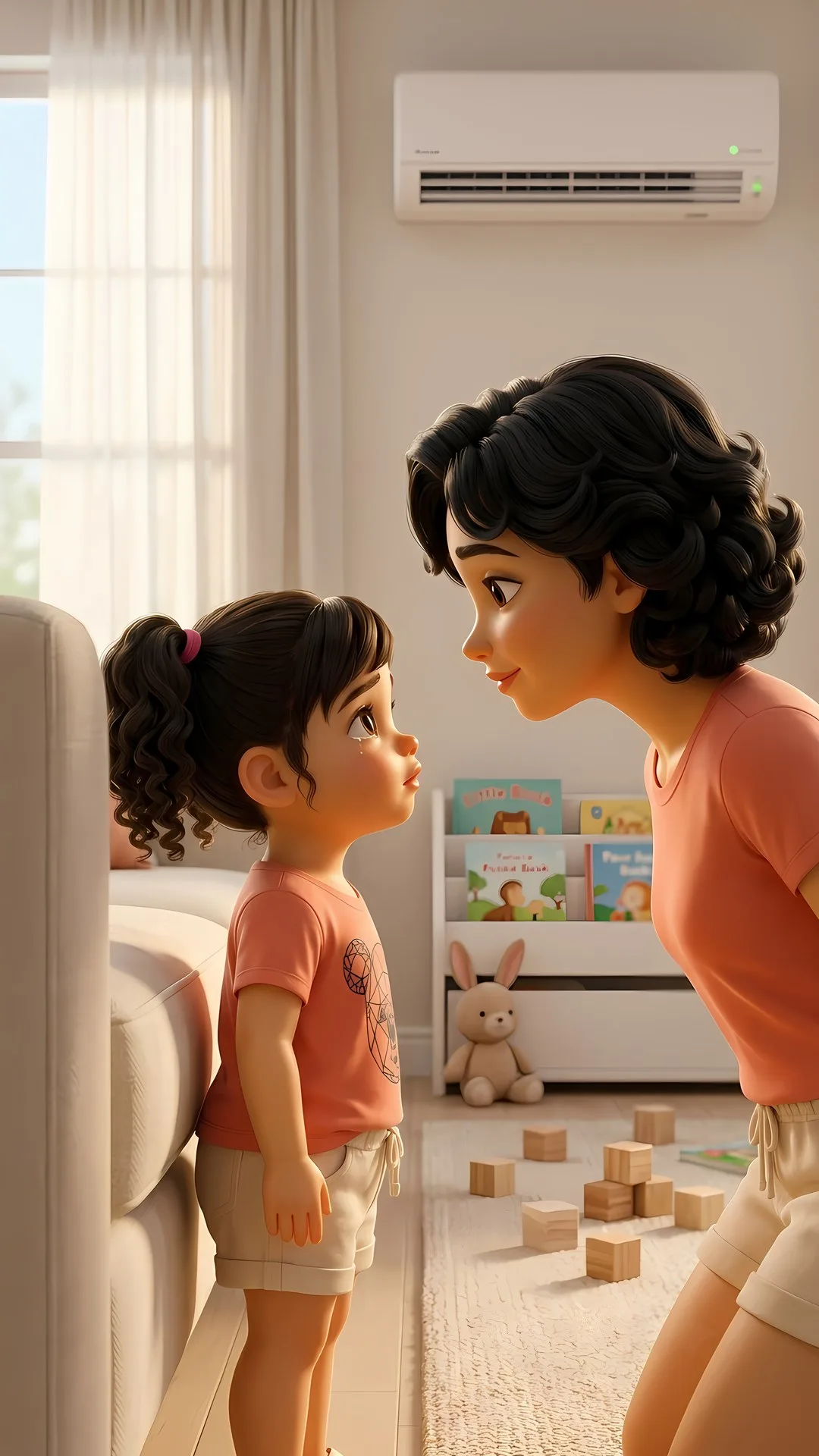
Once you've settled yourself, get down near her and just be there. You don't have to fix the puddle this second. Try something plain and kind, like 'Big feeling, huh? Everybody looked.' Putting simple words on what she's feeling actually helps her body settle. It's the 'name it to tame it' idea, and it works because being seen and understood is what loosens the freeze. No lecture, no 'you're fine,' no 'it's not a big deal.' Just honest, warm words that match what's really happening for her.
A quiet, matter-of-fact line can take the shame right out of the moment. 'Bodies surprise us. Mine has too.' That's it. You're telling her this happens, it's human, and she's not broken or embarrassing. You're not piling on reassurance or turning it into a lesson. You're just being calm and confident so she can lean on that. Kids read shame fast, and they let it go fast too when the adult beside them clearly isn't carrying any.
You don't need her to bounce back or say thank you or act fine. The win is tiny and easy to miss. Her hand finding yours. Her shoulders dropping a notch as you walk away together. Sometimes the kindest thing is no talking at all, just moving on side by side. That quiet exit tells her the moment is over and she's still completely okay with you. That's the whole repair. It doesn't need to be more than that.
what to say to your child 🧡
"Bodies surprise us. Mine has too."