a true story about daily transitions
The Toothbrush Battle Nobody Wins
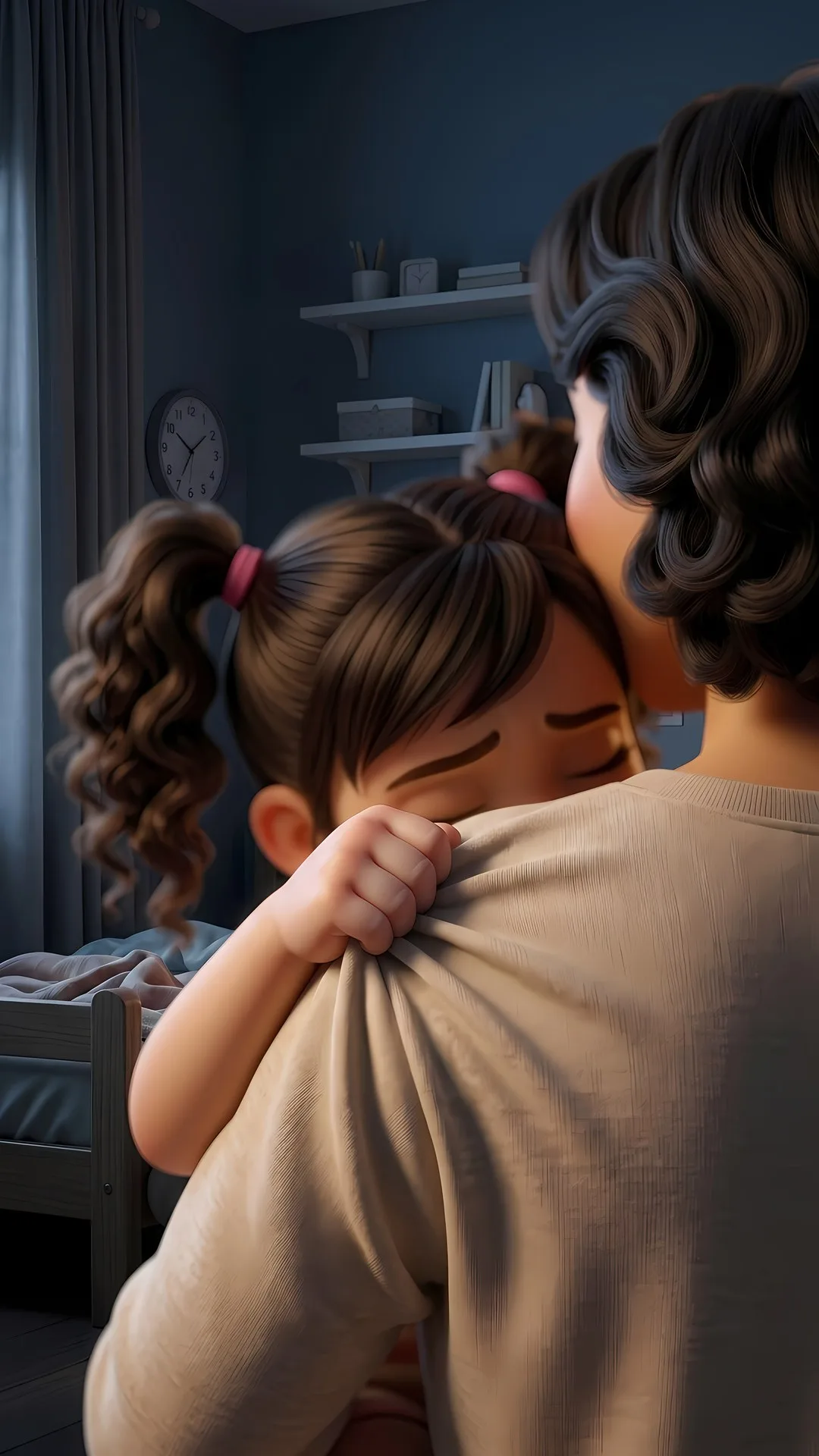
The toothbrush comes out, and Mia's lips press into a tight little line and she turns her whole face to the wall.
the realization
The harder I pushed the brush, the tighter that mouth locked. So I stopped pushing and handed her the toy first. Turns out she'll do almost anything if it's a game and not an order.
Every night, the second the toothbrush appears, Mia clamps her mouth shut and turns away. Lips pressed flat, chin down, the whole body says no. And every night I do the thing that never works: I move in closer, brush in hand, saying come on, just two seconds, open up.
have you ever felt this way too?
The more I insist, the smaller and tighter she gets. I'm basically chasing a moving target with a tiny piece of plastic, and she's winning, and we both know it. Pushing harder only makes that little mouth lock down harder.
So one night I just stopped. I put the brush down, handed her the toothbrush, and gave her the stuffed rabbit. You be the dentist, I said. She lit up. Then I made it silly, told her there were tiny food monsters hiding on the rabbit's teeth and we had to hunt them. Bzzz. Got one. She was giggling.
Then it was her turn to be brushed, and she let me, because now it was the game and not the fight. She held the brush with me, we made the buzzing sounds, we chased the monsters off her own teeth. She actually leaned in.
what I found myself saying
"Here, you be the dentist first. Show the bunny how it's done."
"Wait, wait, I see a food monster hiding right back here. Get it, get it!"
"You hold the brush with me. We'll buzz them all off together."