a true story about autonomy
The Dinner She Always Won
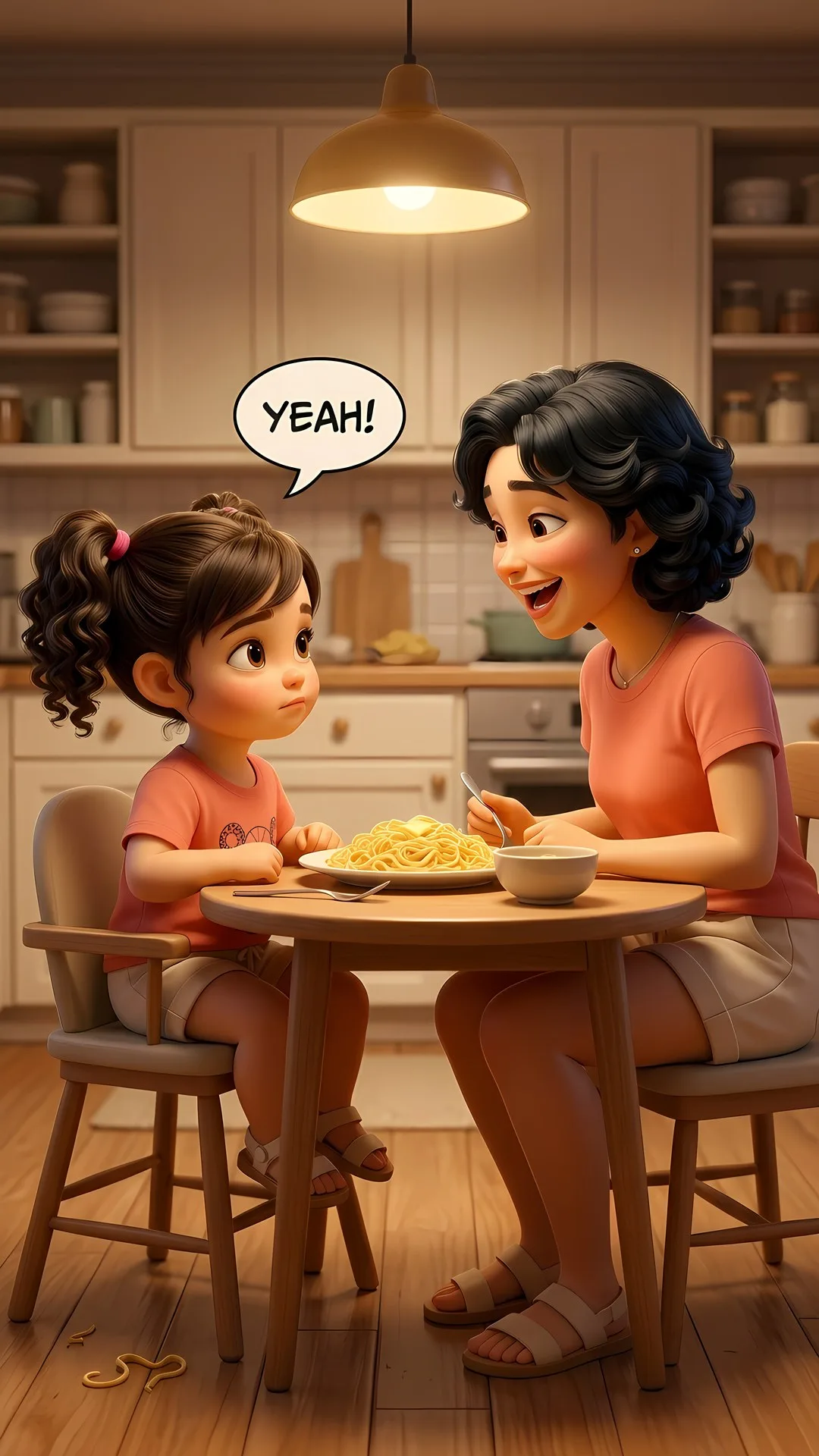
She pushes the full plate an inch toward me and locks eyes. Here we go again.
the realization
The fight was the whole point for her, not the peas. The second I stopped pushing and let her pick, there was nothing left to push against.
It always started the same way. The plate slid back toward me, her lips pressed flat, and dinner turned into something we both had to survive. I'd count to three. I'd do the airplane thing with the spoon. I'd promise dessert I didn't even want her to have.
have you ever felt this way too?
And the harder I pushed, the smaller her mouth got. One more bite. Just one. She'd sink lower in the chair and stare at the wall like I wasn't there. Some nights I'd hear myself bargaining with a three-year-old over four peas and think, how did this become the hill.
So one night I just stopped. I put the spoon down where she could see it. I didn't sigh, I didn't make my fixing-it face. I said, peas or carrots, you decide, and then I actually let it be quiet.
She looked at the spoon. She looked at me. And after a long minute she picked up her fork and speared a carrot herself, like it had been her idea the whole time. It probably was. I didn't clap. I just ate my own dinner next to her.
what I found myself saying
"Peas or carrots? You decide."
"I put the spoon down. Take your time, I've got mine."
"Okay. You know when you're done."